Dalmatian Pelican
Pelecanus crispus
See this bird on the water. Private boat tours from Rijeka Crnojevića, your group only.
The Dalmatian pelican is the bird most people come to Lake Skadar to see, and the reason the lake matters internationally. It is the largest freshwater bird in Europe, with a wingspan approaching three metres, and Skadar holds one of the last significant breeding colonies on the continent.
Records on the lake peak sharply in April and May, when the birds are nesting on floating reed platforms and are at their most visible. Numbers stay reasonable through summer and drop away in winter. If seeing pelicans is the point of your trip, spring is the time to come.
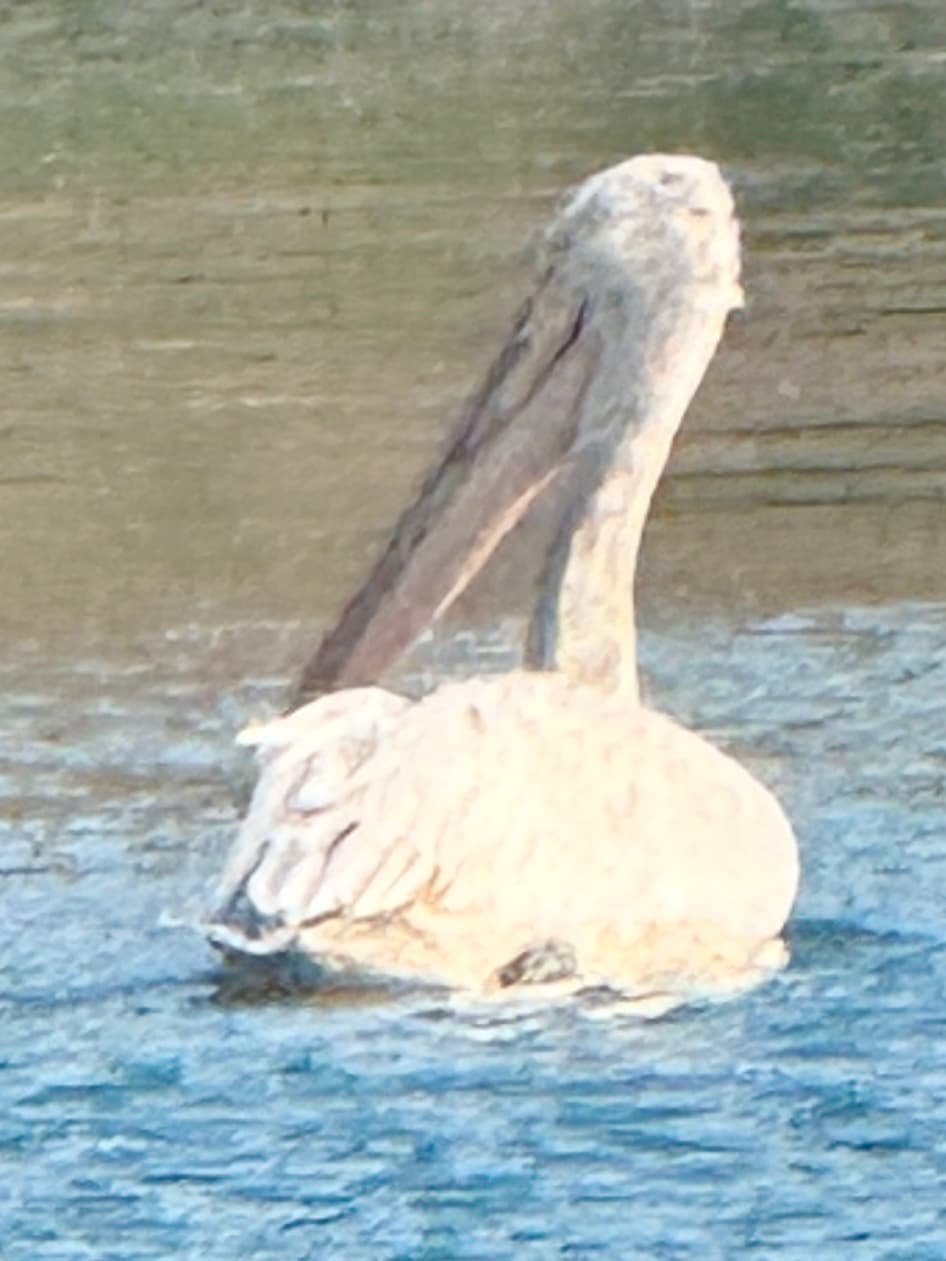
They are unmistakable up close: curly nape feathers, a silver-grey bill that turns orange-red in the breeding season, and a habit of fishing in coordinated groups. From a quiet boat you can watch a dozen of them drive fish into the shallows together.
When to see it on Lake Skadar
Most often recorded in April and May, from 775 sightings logged on the lake. May is the single strongest month.
- Jan: 12 records
- Feb: 7 records
- Mar: 37 records
- Apr: 119 records
- May: 150 records
- Jun: 100 records
- Jul: 91 records
- Aug: 65 records
- Sep: 58 records
- Oct: 84 records
- Nov: 35 records
- Dec: 14 records
Peak months Other months
Conservation status
Near Threatened
Records on the lake
775
Peak season
Apr and May
Habitat
Open water and floating reed platforms
Where on the lake
The colony nests on floating reed platforms away from the shore, and a 200-metre buffer is enforced around the nests in season — marked with buoys. Captain Dusko knows the feeding channels that bring you within clear view while staying well outside it. The reed channels on the 3 Rivers route are the most reliable water for them.
How to tell it apart
Curly nape feathers and a silver-grey bill separate it from the white pelican; look for the orange-red pouch in spring.