Discover the Lake
Lake Skadar Islands: Monasteries, Fortresses and Hidden History
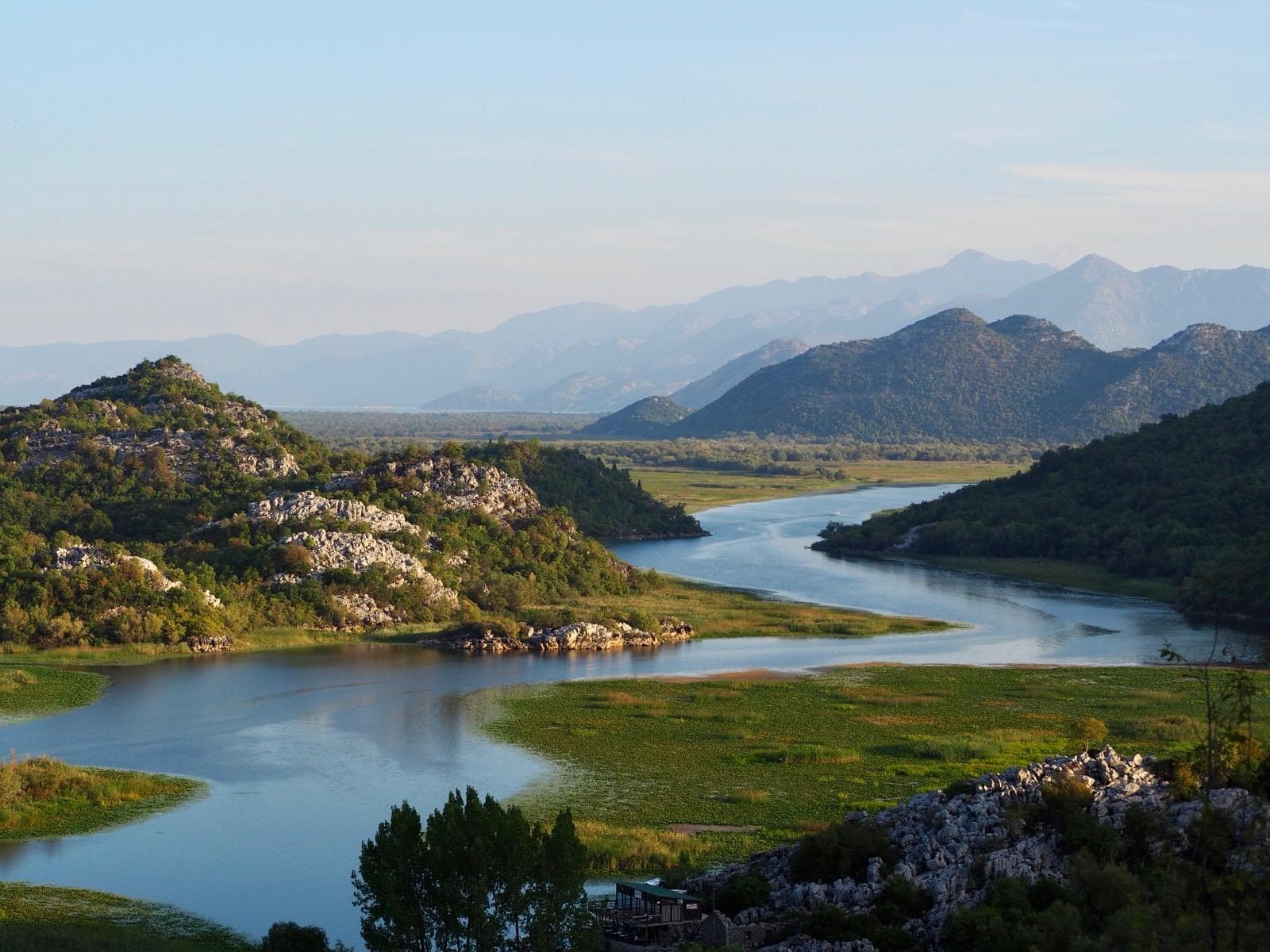
Lake Skadar holds around 40 islands, several crowned with medieval Orthodox monasteries and Ottoman-era fortresses. They were founded by the Crnojević and Balšić rulers who governed this region in the 14th and 15th centuries. The oldest monastery, on Vranjina, dates to the 13th century. Most islands are reachable only by boat, which is why they stay quiet and intact. This guide walks through the main islands, their history, and how to see them.
Islands
Around 40
Largest island
Vranjina
Oldest monastery
Vranjina, 13th century
Most famous fortress
Grmožur, Montenegrin Alcatraz
Built by
Crnojević and Balšić dynasties
Access
By boat, within the national park
A Lake of Monasteries
In the late Middle Ages, Lake Skadar was a centre of Orthodox monastic life. The Balšić and Crnojević families, who ruled the region of Zeta, founded churches and monasteries on the islands as places of worship and refuge. At its height the lake held around twenty monasteries and churches.
Many fell to ruin under later centuries of war and Ottoman rule. Today about ten survive, some restored, some still in ruins, a few with monks or nuns in residence. Reaching them by boat, across open water to a small wooded island, is part of what makes them feel so removed from the modern world.
The islands sit inside the Skadar Lake National Park, so access follows park rules and seasonal water levels.
The Island Monasteries
Vranjina
Vranjina is the largest island, near the northern end of the lake, now linked to the mainland by a causeway. Its monastery, dedicated to St. Nicholas, was founded in the 13th century, which makes it the oldest on the lake. It served as an important religious and political seat in medieval Zeta.
Beška
Beška is a small island off the southwestern shore, opposite the village of Murići. It holds two churches. The older is dedicated to St. George. The second church, the Church of the Holy Mother of God, was built in 1440 by Jelena Balšić, a writer of the ruling family. Today it is an active convent.
Starčevo
Starčevo lies in the southern part of the lake. Its monastery dates to the 14th century, founded by a monk named Makarije. After long neglect it has been restored and is once again inhabited. The island is small, wooded and exceptionally quiet.
Moračnik
Moračnik sits near Beška and Starčevo. Its monastery, with a church dedicated to the Mother of God, dates to the 15th century. Like its neighbours it was abandoned for long periods and has seen restoration. The ruins of an old tower stand beside the church.
Kom
The Kom monastery sits on the Odrinska peninsula, on the strip of land between the Morača and Crnojević river mouths. Built in the 15th century by the Crnojević family, it was one of the most important on the lake and a centre of manuscript copying. It is reached across the water from the northern shore.
The Island Fortresses
Grmožur
Grmožur is a small island near the southern shore, ringed by the walls of an Ottoman fortress built in the 1840s. Montenegro later used it as a prison for serious offenders. With water on every side and no boat for the inmates, escape meant a long swim. That earned it the nickname the Montenegrin Alcatraz. The walls still stand, slowly being reclaimed by the island.
Žabljak Crnojevića
Žabljak Crnojevića is a fortress on a low rise near the northern shore, not a true island but surrounded by wetland. In the 15th century it was the capital of Ivan Crnojević and the seat of the Zeta state, before the court moved inland to Cetinje. Its ruined walls overlook the lake and the reed plains.
Besac
Besac Fortress stands on a hill directly above Virpazar, built by the Ottomans in 1478 to control the lake and the routes around it. It is one of the few sites reachable on foot, and it gives a wide view over the southern lake and the town below.
How to See the Islands
The islands and monasteries are spread across the lake, and most have no road. A boat is the only way to reach them. The fuller the tour, the more sites you can take in.
The three-hour Full 67 km Circuit covers the widest range, passing island fortresses and monastery ruins along with the pelican colonies and lily fields. Shorter tours focus on the canyon and the nearer shore. All tours depart from Rijeka Crnojevića with Captain Dusko, who can tell the story behind each site as you pass.
Access to active monasteries depends on the season and on respecting the religious communities. Captain Dusko knows which can be approached and when. For the wider picture of the lake, see the complete Lake Skadar guide.
Plan your day on the water
The monasteries and fortresses are scattered across open water, so the longer tours see the most. The three-hour Full 67 km Circuit reaches the island sites along with the wildlife channels, all on a private boat from Rijeka Crnojevića. Captain Dusko has read these waters for over 15 years and knows the history of each island. Compare every route on the tours page, or book an island tour directly on this site.